
Deck Inspection in Huntsville, AL:
Framing, Connections & Safety Concerns
Get a FREE Quote
Huntsville Deck Builders helps homeowners plan deck inspection inquiries in Huntsville, Alabama, when the condition of an existing deck is uncertain. Loose rails, soft wood, movement, and visible corrosion deserve more than a surface glance. An assessment can help identify the components that need attention before a repair, resurfacing, or replacement scope is chosen.
A deck review can cover the walking surface, supporting frame, connection to the house, stairs, landings, guards, and handrails. Access below the deck matters because important connections and deterioration may not be visible from above. The inspection scope should state what can be examined and what remains concealed.
The resulting findings should distinguish observations from conclusions that require further investigation or engineering. A visual assessment cannot establish the condition of every hidden connection, and it is different from a municipal permit inspection or approval.
Clear findings help you decide what to address first and communicate the work when requesting an estimate. Include the deck’s approximate age, height, material, reported movement, and any planned surface changes in your inquiry. Tell Huntsville Deck Builders the property location and what prompted the concern. Use the free quote form to describe the assessment you need and start the next step.
Understand the Condition Before Planning the Work
Deck Inspection Scope
A useful inspection follows the deck from its foundation and connections to the surfaces and rails people use.
Get a free quote for your deck project →
Framing, Supports & House Connections
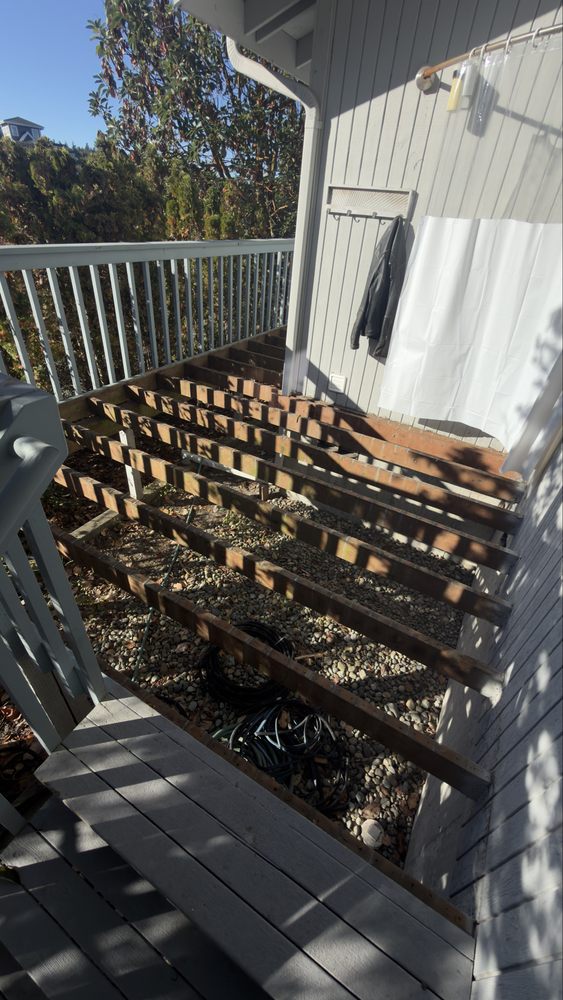
A framing review examines accessible posts, beams, joists, and the deck’s connection to the house where present. Visible deterioration, movement, corrosion, and connection details help establish areas needing further attention. The reviewer needs access to the underside and should identify anything hidden by finishes, storage, or enclosure. Findings should explain the observed condition without assuming that concealed material is sound. If the existing design or a proposed change raises structural questions, those questions may require a qualified design professional beyond a visual condition review.
Deck Surface, Stairs & Railings
Surface and access inspection covers boards, fasteners, stair treads, stringers, landings, guards, and handrails. A loose component should be considered with its attachment and supporting material, rather than described only as a cosmetic defect. Wear patterns and moisture exposure can help identify where further investigation is needed. The review should document the location of concerns so a later estimate can address the same items. Accessible inspection of these parts is useful both before targeted repairs and when a larger deck improvement is being planned.
Pre-Resurfacing & Project Assessments
A pre-project assessment helps establish whether an existing deck is a candidate for the proposed improvement. New boards, a different decking product, or a changed railing system can introduce support and connection requirements that the old deck does not automatically meet. The review should address retained components and compatibility with the intended work. This is especially useful before treating a wood-to-composite conversion as surface replacement alone. The assessment and construction estimate should make clear which findings have been resolved and which still require further investigation.
What Useful Inspection Findings Include
The selected materials need to work together, from the supporting details to the visible finish.
Locations & Observed Conditions
Findings should identify the component, location, and observed concern. Photos and clear descriptions help distinguish a damaged board from a connection or framing issue when the work is later priced.
Access & Concealed Areas
The report should state limitations such as inaccessible framing, enclosed areas, and hidden connections. An unexamined component should not silently be treated as verified.
Recommended Next Actions
Recommendations should separate maintenance, repair, further investigation, and design review where appropriate. That distinction helps turn the assessment into a practical scope discussion.
Inspection, Engineering & Permit Approval
Resolve these project conditions before finalizing the scope and material quantities.
Visual Condition Assessment
A visual review records accessible conditions within its agreed scope. It is useful for identifying concerns, but it does not reveal every concealed defect or establish every structural design assumption.
Further Structural Review
Uncertain capacity, major changes, or complex connection questions may need engineering or further investigation. The assessment should identify those questions and the appropriate next step rather than overstate its conclusions.
Municipal Inspection
A private condition assessment is different from an inspection required by the permitting authority. Confirm the property’s jurisdiction and the approval requirements for any resulting construction work.
Deck Inspection Process
The work sequence connects the initial assessment with a defined scope and finished project.
Purpose & Access Review
The inquiry establishes why the inspection is needed, what work is being considered, and which parts of the deck are accessible. Approximate age and previous repairs provide useful context.
Accessible Component Assessment
The review follows the deck’s supports, connections, surface, stairs, and railings within the agreed scope. Observations and inaccessible areas should be documented clearly.
Findings & Priorities
The findings distinguish observed conditions from unresolved questions. Repair needs, maintenance recommendations, and further technical review should be separated so they are easier to act on.
Repair or Project Handoff
The assessment can inform the next repair, resurfacing, or replacement estimate. Any remaining investigations or approval requirements should be carried into that scope rather than lost at handoff.
Choosing a Useful Inspection Scope
A detailed proposal makes the scope, product choices, and completion expectations easier to compare.
Purpose of the Assessment
An annual condition review, a reported defect, and a planned composite conversion can require different questions. State the purpose before agreeing to the scope.
Documented Limitations
The deliverable should explain what was examined and what could not be accessed. Clear limitations make the conclusions more useful and prevent unsupported assumptions.
Actionable Findings
Specific component locations and recommended next steps are more useful than a broad statement that the deck looks old. The findings should support a defined follow-up decision.
Deck Inspection FAQs
Is an inspection the same as a repair estimate?
No. An inspection assesses conditions within its scope, while an estimate prices defined work. The findings can inform the repair proposal, but the two deliverables should be distinguished.
Can an inspector see every hidden defect?
No. Concealed connections and inaccessible areas can limit a visual assessment. The inspection should state those limits and identify any further investigation needed.
Should the frame be checked before composite resurfacing?
Yes. Retained framing and connections need to be suitable for the proposed decking system. A different surface product can have installation requirements that the old deck does not automatically satisfy.
Does a private inspection replace a permit inspection?
No. A condition assessment does not replace inspections required by the responsible building authority. Confirm approval requirements for the property and any proposed construction work.
What information should I include in the inquiry?
Include the location, approximate age and height, deck material, visible concerns, access limitations, and any planned changes. Photos can help describe the concern but do not replace an on-site assessment.
What happens after problems are identified?
The next step depends on the findings. Maintenance, targeted repair, further investigation, engineering, or replacement may be appropriate. The report should make those recommended actions clear.
Request Your Deck Inspection Quote
Tell Huntsville Deck Builders about your property, the work you need, and your preferred materials. Include approximate dimensions and the best way to reach you in the form above.