
Deck Refinishing in Huntsville, AL:
Surface Preparation & Fresh Finish
Get a FREE Quote
Huntsville Deck Builders helps homeowners plan deck refinishing in Huntsville, Alabama, when the existing wood remains useful but its coating has worn, peeled, or become uneven. Refinishing focuses on the surface you already have. The preparation needed for a fresh finish depends on the old product, how well it is attached, and the condition of the wood beneath it.
The scope may include cleaning, stripping an incompatible coating, sanding rough areas, and applying a suitable exterior deck finish. Stairs, rails, and board edges need attention alongside the main floor because they can weather differently and take longer to prepare.
A change from an opaque coating to a more transparent stain is different from renewing a compatible existing finish. Previous color, embedded pigment, and replacement boards can affect the result. Establishing a realistic appearance before work begins helps avoid treating a sample color as a guaranteed match.
Refinishing also requires suitable drying conditions and time before furniture and regular foot traffic return. Damaged or decayed components need a separate repair decision before coating. Tell Huntsville Deck Builders about the existing finish, the areas that are peeling or rough, and the appearance you want. Use the free quote form to begin your refinishing inquiry.
Renew the Finish on Wood Worth Keeping
Deck Refinishing Services
The right preparation depends on what is already on the deck. Refinishing should produce a surface suitable for the selected coating rather than simply covering the old one.
Get a free quote for your deck project →
Old Finish Removal & Surface Preparation
Old finish removal addresses coating that is peeling, incompatible, or unsuitable for the intended change. The condition of the coating determines whether cleaning and local preparation are sufficient or broader stripping is needed. Wood species, nearby finishes, and access around railings also affect the method. A sample area can help establish how the old product releases and what color remains in the wood. The proposal should describe preparation depth so a maintenance recoat is not confused with a full finish-removal project.
Sanding & Rough-Surface Refinishing
Sanding can address rough fibers and prepare appropriate wood surfaces as part of refinishing. It does not restore strength to decayed boards or resolve unsuitable framing below them. The preparation should suit the selected coating, including its surface requirements, rather than aiming for an arbitrary furniture-smooth finish. Board edges, fastener locations, and stair treads need particular attention during the assessment. The scope should distinguish sanding of the main walking surface from detailed work on rails, posts, and other parts of the deck.
Deck Color & Coating Changes
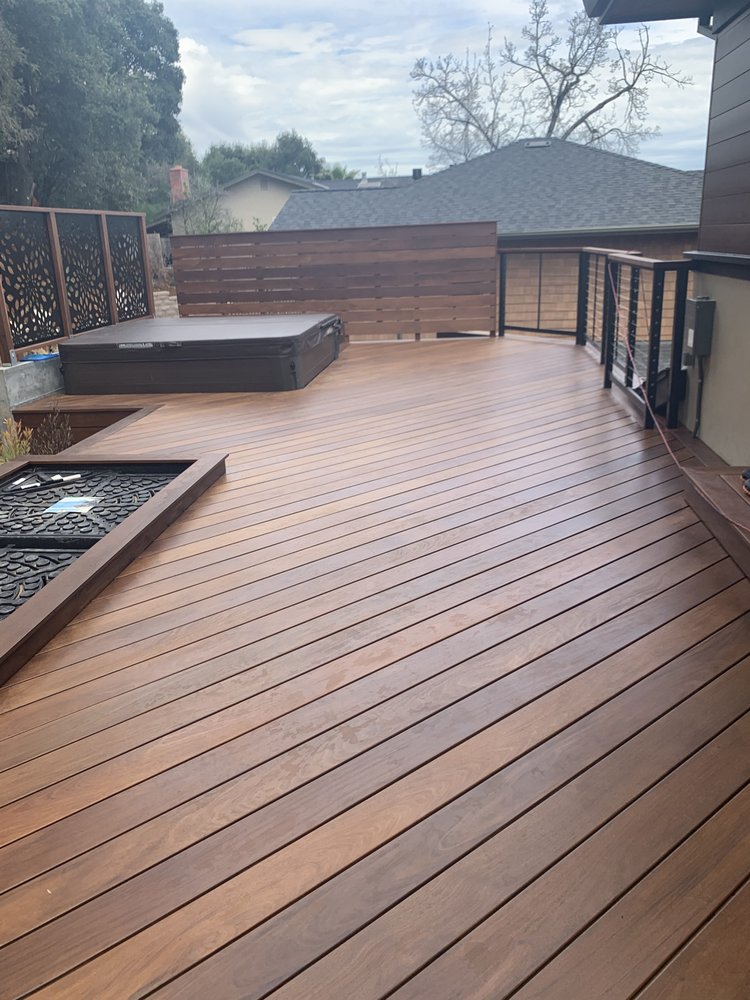
Changing a deck’s finish involves more than selecting a new color. The existing product, remaining pigment, wood condition, and chosen opacity influence how the next coating will look and perform. A more transparent result may need substantially more preparation than a compatible recoat. Railings and stairs should be included in the color plan where they form one visible outdoor space. Product selection and a prepared sample help establish expectations before the whole deck is finished, especially where new boards meet weathered wood.
Choosing the Next Deck Finish
The selected materials need to work together, from the supporting details to the visible finish.
Existing Coating Compatibility
Identify the previous product if possible. A new coating must be compatible with what remains after preparation. Uncertain coating history can make a test area particularly useful.
Color & Opacity
Transparent, semi-transparent, and more opaque finishes reveal different amounts of wood grain. The previous color and condition of the boards influence the result, so compare samples on the prepared deck.
Wood Condition & Absorption
Weathered boards and new replacement pieces may absorb finish differently. Preparation and readiness should follow the coating manufacturer’s instructions. A uniform application does not necessarily produce identical color across unlike wood.
Refinishing Scope & Surface Readiness
Resolve these project conditions before finalizing the scope and material quantities.
Peeling Versus Fading
Peeling indicates a different preparation problem from a finish that has simply faded. Loose or incompatible material needs to be addressed before recoating. The assessment should identify the condition across the entire treated area.
Repair Before Finish
Split, decayed, or loose components need evaluation before refinishing. Surface preparation cannot turn deteriorated wood into a sound deck part. Include necessary repairs separately in the scope.
Weather & Drying Conditions
Wood readiness, forecast conditions, and the product’s application requirements affect scheduling. Allow the specified drying or curing time before returning furniture and ordinary use to the finished surface.
Deck Refinishing Process
The work sequence connects the initial assessment with a defined scope and finished project.
Coating & Wood Assessment
The review starts with the current finish, adhesion, wear pattern, and wood condition. It identifies the surfaces to be treated and any repair needs before selecting the new coating.
Preparation Plan & Finish Sample
The preparation approach and intended color are defined together. A sample can help evaluate removal and appearance, especially for a change in opacity or an uncertain coating history.
Cleaning, Removal & Sanding
Preparation removes the material required by the agreed scope and leaves the wood ready for the specified finish. Drying and product instructions guide the sequence before coating begins.
Application & Return to Use
The selected finish is applied under appropriate conditions. Completion guidance should explain when the deck can receive foot traffic and furniture, along with cleaning and future recoating requirements.
Comparing Deck Refinishing Estimates
A detailed proposal makes the scope, product choices, and completion expectations easier to compare.
Named Preparation Tasks
A quote should distinguish washing, stripping, sanding, and repair. These tasks have different purposes and labor requirements, even when the final coating is the same.
A Defined Finish Product
The product type, color, opacity, treated surfaces, and application scope should be clear. The selected system should suit the prepared wood and exterior deck use.
Realistic Appearance Expectations
Remaining pigment, old damage, and mixed-age boards can affect the finish. Agree on the expected appearance before work rather than assuming a sample chip describes every board.
Deck Refinishing FAQs
Is refinishing the same as staining?
Refinishing includes the preparation needed to renew or change an existing finish. Staining is the application stage and may require less removal when the current surface is suitable for a compatible maintenance coat.
Can a painted deck become a stained deck?
It may be possible, but the old coating and remaining pigment can limit the result. The wood condition and removal requirements should be assessed before promising a transparent or semi-transparent finish.
Does every deck need sanding?
No. The required preparation depends on the surface condition and chosen product. Some projects need targeted sanding, while others require a different preparation approach.
Will refinishing repair rotten boards?
No. Rotten or otherwise unsuitable boards require a repair or replacement decision. A finish changes the surface condition and appearance; it does not replace lost structural capacity.
What affects refinishing cost?
Coating-removal difficulty, surface area, rail and stair detail, repairs, access, and the selected finish affect the estimate. A full strip and finish change is a different scope from a maintenance recoat.
When can furniture go back on the deck?
Follow the selected product’s drying and curing instructions for the actual conditions. The finishing plan should provide return-to-use guidance rather than assuming every coating is ready the next morning.
Request Your Deck Refinishing Quote
Tell Huntsville Deck Builders about your property, the work you need, and your preferred materials. Include approximate dimensions and the best way to reach you in the form above.