
PVC Deck Builder in Huntsville, AL:
New PVC Decks & Surface Conversions
Get a FREE Quote
Huntsville Deck Builders helps homeowners plan PVC decks in Huntsville, Alabama, for new outdoor spaces and suitable existing structures ready for a manufactured surface. PVC decking is a separate material category from wood-plastic composite. The exact product determines the installation details, appearance, care requirements, and written manufacturer coverage that belong in the project plan.
A PVC deck scope includes more than field boards. Framing compatibility, board direction, fastening, expansion details, fascia, stairs, and railing connections need to work together. A surface conversion also requires an assessment of the structure being retained before the new system is specified.
Color and texture samples help compare the finish against the home, while product instructions guide support and spacing. The design should account for the intended exposure and use without treating broad material labels as a substitute for product-level information.
Detailed borders and transitions can affect both labor and supporting work. A complete estimate should identify the selected boards and all related components, along with new or retained framing. Tell Huntsville Deck Builders about the proposed deck or existing surface, approximate dimensions, preferred appearance, and any stair changes. Use the free quote form to start your PVC deck inquiry with the property location.
Plan the Board System, Movement and Edge Details
PVC Deck Building Services
PVC projects need a complete product-specific installation plan, from the supporting frame to the finished perimeter.
Get a free quote for your deck project →
New PVC Deck Installation
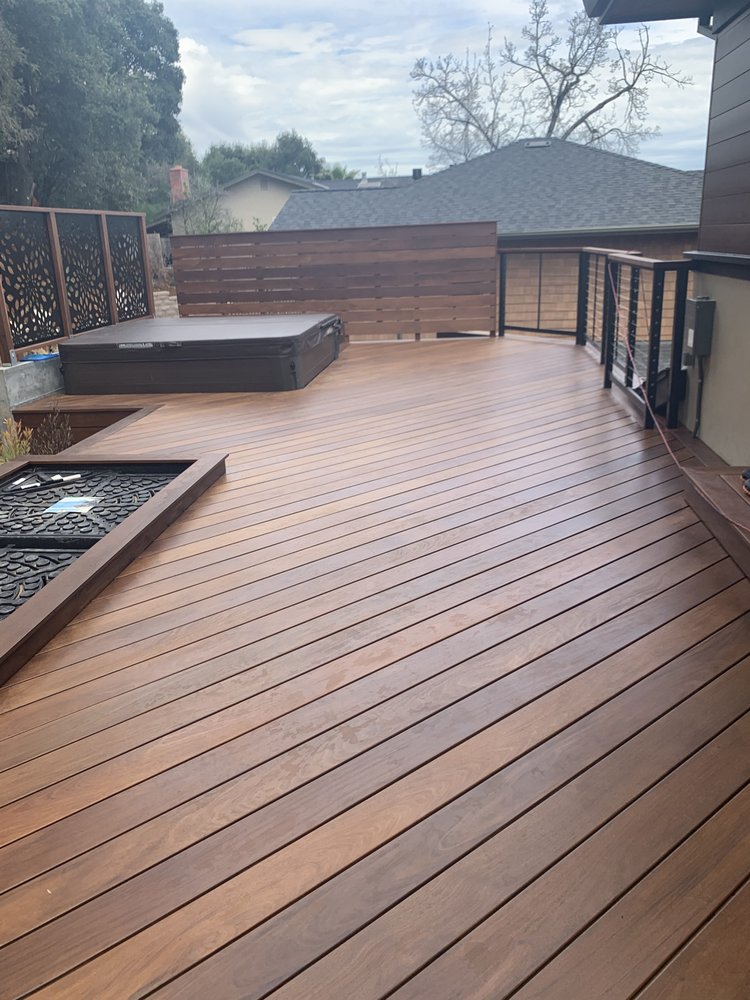
A new PVC deck allows the support structure and manufactured surface to be coordinated from the start. The footprint, elevation, board direction, railings, and stair plan establish the construction scope before products are ordered. The chosen system’s fastening, support, and movement requirements should be incorporated into the design. Fascia and borders also need defined details. A proposal should identify the actual PVC product and complete assembly so the finished deck is priced consistently, rather than assuming every plastic-looking board can use the same generic installation method.
PVC Resurfacing on Suitable Framing
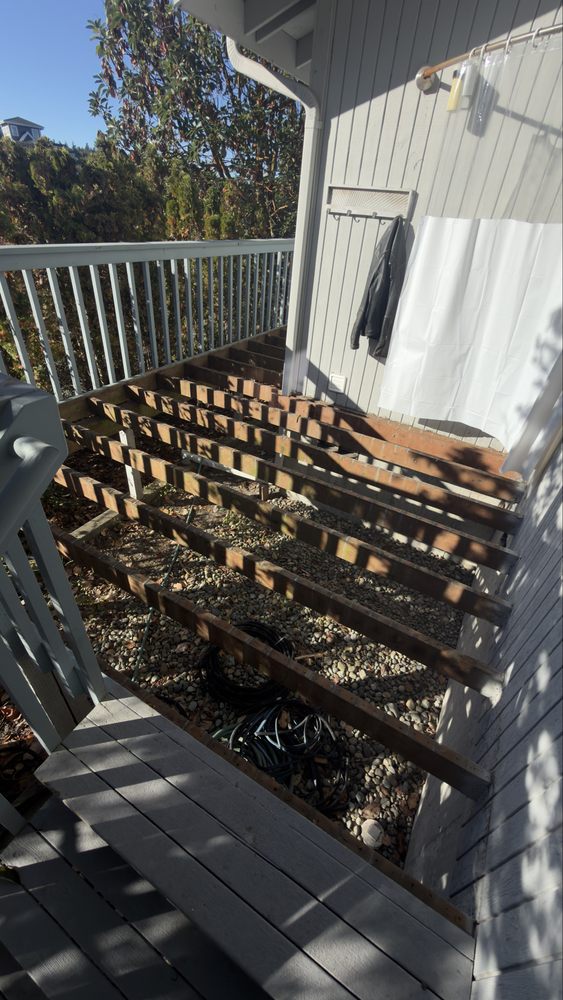
PVC resurfacing replaces an existing surface only where the retained frame and connections remain suitable for the selected system. The old deck needs review for deterioration, joist configuration, fastening support, and layout compatibility. A different board direction or detailed border can introduce additional framing work. The quote should identify that work and list the components being reused. This makes the conversion scope clear before old boards are removed and prevents an attractive new surface from concealing structural conditions that still need to be addressed.
PVC Borders, Fascia & Stair Details
PVC borders, fascia, and stair surfaces require coordinated product and installation details. The main field boards, exposed edges, trim, and treads may use different profiles or fastening methods. Movement and support requirements should be resolved at corners, transitions, and perimeter pieces before installation begins. The material schedule needs to identify how those parts meet the railing and stair structure. Including the complete finish scope makes quantities and labor more predictable and keeps the deck’s appearance consistent from the main surface to the lower landing.
PVC Product & Installation Decisions
The selected materials need to work together, from the supporting details to the visible finish.
Exact Board System
Name the manufacturer, collection, profile, and color. PVC products can differ in construction and published characteristics. The selected product’s current instructions provide the basis for installation.
Movement, Gaps & Fastening
PVC installation needs to accommodate the chosen system’s requirements for movement, spacing, and fastening. The details depend on the product and conditions. Avoid applying one generic gap rule to every board.
Trim & Stair Compatibility
Fascia, border pieces, treads, and exposed edges should be specified for their applications. Matching appearance does not establish interchangeable support or fastening requirements.
PVC Versus Composite & Wood Decking
Resolve these project conditions before finalizing the scope and material quantities.
Different Material Categories
PVC and wood-plastic composite are different manufactured options. Compare the specific products and their application requirements rather than assume the category alone guarantees a particular outcome.
Appearance in the Actual Setting
Review samples beside the house and consider the planned exposure and use. Color, texture, and published product information should guide the decision together.
Care & Manufacturer Terms
PVC still needs appropriate cleaning and use. Retain the exact product identification, care instructions, and written terms, and distinguish those from installation workmanship coverage.
PVC Deck Builder Process
The work sequence connects the initial assessment with a defined scope and finished project.
Project & Frame Assessment
The initial review establishes whether the project is a new build or a conversion. Existing framing, access, layout, and the intended board system guide the scope.
Product Selection & Complete Estimate
The selected collection, profile, colors, fascia, stairs, and railings become a defined material schedule. Retained framing and required modifications are listed separately from the new surface.
Compatible Framing & Installation
The support system is prepared for the chosen boards and layout. Decking, fastening, border support, fascia, and stair details follow the product’s applicable installation instructions.
Finish Review & Product Care
Completion includes the agreed edge details, stairs, railings, cleanup, and product-care information. Manufacturer documentation and any workmanship terms should be retained with the project records.
What a PVC Deck Proposal Should Define
A detailed proposal makes the scope, product choices, and completion expectations easier to compare.
A Product-Specific Assembly
The quote should identify boards, profiles, fastening, fascia, borders, and stair details. An allowance described only as PVC leaves substantial decisions unresolved.
Suitable New or Retained Support
The proposal should explain whether framing is new or retained and which modifications are included. Compatibility is part of the scope, even when the visible change is limited to boards.
Finish Details & Documentation
Edges, transitions, care instructions, and coverage documents belong in the handoff. Keep the product schedule so future maintenance follows the correct guidance.
PVC Deck Builder FAQs
Is PVC decking the same as composite?
No. PVC decking and wood-plastic composite are different categories. Compare the selected products’ construction, installation instructions, care, and written coverage.
Can PVC go over my existing deck frame?
It may be possible when the frame and connections are sound and compatible with the selected product and layout. That suitability needs assessment before the project is priced as resurfacing.
Does PVC decking need expansion gaps?
The installation must follow the selected product’s spacing and movement requirements for the application and conditions. Do not use one universal gap value for every PVC system.
Does PVC decking need cleaning?
Yes. Use the current care and cleaning instructions for the chosen product. A manufactured surface still needs debris removal and appropriate attention to spills and exposure.
Can PVC stairs and borders be included?
Yes, where specified with compatible profiles, support, and fastening. Stair and perimeter applications need their own details rather than an assumption that field-board installation applies everywhere.
What affects PVC deck cost?
The product, dimensions, height, framing, access, border design, fascia, stairs, and railings affect the complete installed price. Compare fully defined systems and scope rather than board cost alone.
Request Your PVC Deck Builder Quote
Tell Huntsville Deck Builders about your property, the work you need, and your preferred materials. Include approximate dimensions and the best way to reach you in the form above.